Running and the knee during marathon season: what the evidence says
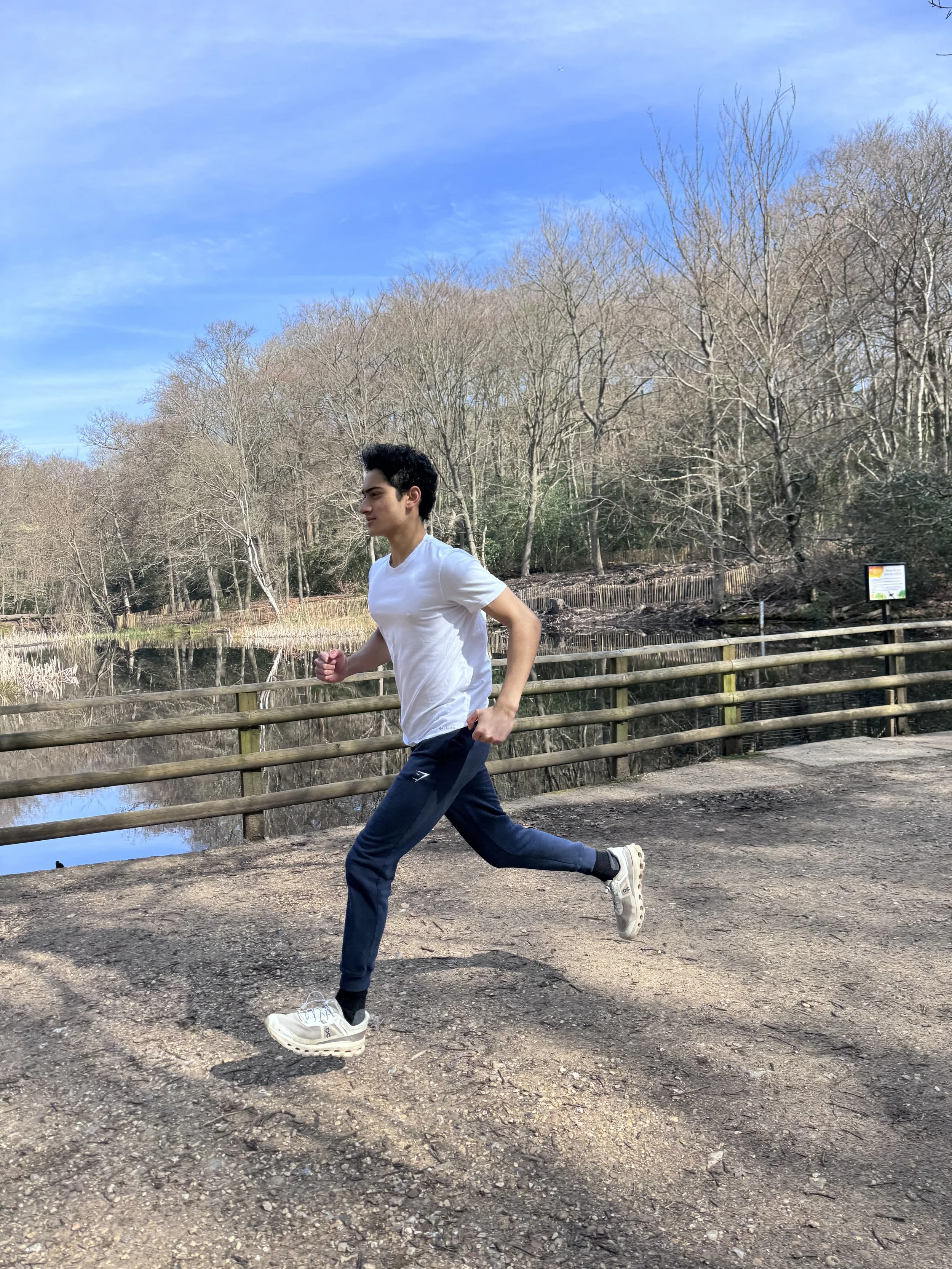
Running and the Knee:
What the Evidence Really Says
As a knee surgeon, I am asked the same questions repeatedly: Is running bad for your knees? Can I run after my ACL reconstruction? Should I give up running after a meniscectomy? These are among the most important questions a patient can ask — because the answers are genuinely consequential, and because the popular narrative is often wrong.
This article sets out what the peer-reviewed scientific literature actually tells us. I have drawn on systematic reviews, meta-analyses, and prospective cohort studies to replace myth with evidence. The message — for most people, including many who have had knee surgery — is more optimistic than patients expect.
Running and the Healthy Knee
1.1 Does Running Damage the Knee Joint?
This is the question I am asked most frequently. It is also the question for which the evidence is most unambiguous — and most counterintuitive to patients who expect the answer to be yes.
Joint loading: the basic physiology
Each foot strike during running transmits a ground reaction force of approximately 2–3 times body weight through the lower limb. This sounds alarming, but articular cartilage, subchondral bone, and the periarticular soft tissues have evolved precisely to manage cyclical compressive loading. The key principle is that moderate, repetitive load is anabolic to cartilage — it promotes synovial fluid circulation, nutrient delivery to chondrocytes, and adaptive remodelling. Problems arise not from running per se, but from excessive load increments or running on a joint with pre-existing structural compromise.
Epidemiological evidence: recreational running protects the knee
A landmark systematic review and meta-analysis by Alentorn-Geli et al. (2017), published in the Journal of Orthopaedic and Sports Physical Therapy, found that recreational runners had a significantly lower prevalence of hip and knee osteoarthritis (OA) compared with both competitive runners and sedentary non-runners. The odds ratio for recreational runners compared with controls was 0.6 (95% CI: 0.49–0.73) — a 40% lower OA prevalence.
An updated systematic review by Dhillon et al. (2023) in the Orthopaedic Journal of Sports Medicine, incorporating 17 studies across 7,194 runners and 6,947 non-runners, found no significant difference in radiographic knee OA between the two groups. Critically, knee pain prevalence was significantly higher in the non-runner group (p < 0.0001), and one study found non-runners were nearly twice as likely to progress to total knee replacement (4.6% vs. 2.6%; p = 0.014).
Cartilage-level evidence
A 2023 meta-analysis by Esculier et al. in Osteoarthritis and Cartilage, examining 24 MRI studies across 446 knees, found that cartilage thickness and volume decrease slightly immediately after a run (by approximately 3–5%), but these changes are transient — resolving within hours — and consistent with normal adaptive loading, not damage.
The clinical message is unambiguous: for the healthy recreational runner, running does not damage the knees. Sedentary behaviour carries a substantially higher joint health risk than moderate endurance running.
- Alentorn-Geli E et al. J Orthop Sports Phys Ther. 2017;47(6):373–390. Systematic review and meta-analysis; OR 0.6 for recreational runners vs. sedentary controls.
- Dhillon J et al. Orthop J Sports Med. 2023. 17 studies, n = 14,141; no increase in radiographic OA in runners; non-runners had significantly higher knee pain and arthroplasty rates.
- Esculier J-F et al. Osteoarthritis Cartilage. 2023;31(2):211–224. 24 MRI studies; post-run cartilage changes are small and transient.
- Voinier D, White DK. Eur J Rheumatol. 2024;11(Suppl 1):S21–S31. Overview of reviews; physical activity does not increase structural OA progression.
1.2 Is Running Good for My Heart?
A prospective study by Bhuva et al. (2020), published in the Journal of the American College of Cardiology, followed 138 healthy first-time London Marathon runners through six months of beginner training. Training and race completion — even at low intensity (6–13 miles per week) — reduced central blood pressure and aortic stiffness equivalent to a 4-year reduction in vascular age. The effect was greatest in older, slower runners with higher baseline systolic blood pressure.
Regarding mortality, a systematic review and meta-analysis by Pedisic et al. (2020) in the British Journal of Sports Medicine, pooling 14 studies from six prospective cohorts (n = 232,149; 25,951 deaths; 5.5–35-year follow-up), found that running was associated with 27% lower all-cause mortality, 30% lower cardiovascular mortality, and 23% lower cancer mortality. Meta-regression found no significant dose-response trend — any amount of running conferred significant mortality benefit over sedentary behaviour.
- Bhuva AN et al. J Am Coll Cardiol. 2020;75(1):60–71. n = 138 first-time London Marathon runners; 4-year vascular age reversal; greatest benefit in older, slower runners.
- Pedisic Z et al. Br J Sports Med. 2020;54(15):898–905. Systematic review and meta-analysis; 27% lower all-cause, 30% lower CV, 23% lower cancer mortality with any running.
1.3 Does Running Make You Age Faster? And What About Mental Health?
The biological evidence points firmly in the opposite direction to popular concern. A large prospective cohort analysis (Lee et al., Progress in Cardiovascular Disease) found that even slow, infrequent runners had meaningfully lower mortality risk than non-runners, with an estimated 3-year longevity advantage.
On mental health, a systematic review and meta-analysis by Banyard et al. (2025), pooling 32 RCTs (n = 3,243), found that aerobic exercise produced a large effect size for reduction in depressive symptoms (pooled SMD = −0.97) and a significant moderate effect on anxiety. These effect sizes are comparable to first-line pharmacological interventions in mild-to-moderate depression.
And that feeling after a run? A 2021 study by Siebers et al. in Psychoneuroendocrinology confirmed that exercise-induced euphoria is driven by endocannabinoids — not endorphins, as is commonly believed — acting on the brain's cannabinoid receptors.
1.4 What Does the Evidence Say About Running Shoes?
Running footwear is one of the most commercially contested areas in sports medicine. A focused review by Napier and Willy (2022) concluded that the evidence-supported recommendation is a shoe that is lightweight, comfortable, and has minimal pronation control technology. The 'comfort filter' hypothesis — that a runner's perceived comfort is the most reliable indicator of biomechanical suitability — has prospective support from a 2025 study of 800+ recreational runners, which found that perceived cushioning was associated with lower injury risk. Despite enormous investment in running shoe technology over 50 years, overall running-related injury rates have not decreased. Price and brand are poor proxies for safety.
Running and the Surgically Treated Knee
This is where the clinical picture becomes more nuanced, and where my expertise as a knee surgeon is most relevant to the questions patients ask. The three most common surgical scenarios I encounter — ACL reconstruction, meniscal repair, and meniscectomy — each carry a distinct evidence base and require distinct guidance.
2.1 Running After ACL Reconstruction
The long-term OA reality
I am candid with my patients: ACL injury changes the long-term trajectory of the knee regardless of what we do surgically. ACL reconstruction restores knee stability and enables return to sport — but it does not reliably alter the natural history of post-traumatic osteoarthritis (PTOA). The injury itself, not the reconstruction, is the primary driver of cartilage degeneration.
A systematic review and meta-analysis by Grassi et al. (2022), examining outcomes at a minimum 20-year follow-up across 16 studies and 1,771 patients, found that signs of radiographic OA were present in 73.3% of the operated knees — a relative risk of 2.8 compared with the uninjured contralateral knee. However, severe OA was present in only 12.8% of cases and total knee arthroplasty was required in only 1.1%. The majority of patients retained satisfactory subjective outcomes at 20 years. Radiographic OA and symptomatic OA do not map onto each other reliably.
The single most important determinant: meniscal status
Of all the factors that predict long-term OA after ACL injury, the status of the meniscus at the time of injury is the dominant one. A 22-year retrospective cohort study (Bouche et al., 2020) of 182 patients found that moderate-to-severe OA was present in 17% of knees without meniscectomy at time of ACL reconstruction, compared with 46% in those who required concomitant meniscectomy. Preserve as much meniscal tissue as possible, repair rather than excise wherever feasible.
Return to running rates
Approximately 81% of patients return to some form of sport or activity after ACL reconstruction, with 65% returning to their previous sport level and 55% to competitive sport. For elite athletes, a systematic review found 83% returned to pre-injury sport at a mean of 6–13 months post-surgery. But return to sport does not mean return to full biomechanical function.
The critical problem: persistent running biomechanical asymmetries
A prospective biomechanical study by Knurr et al. (2021), published in the American Journal of Sports Medicine, followed Division I collegiate athletes through the first year after ACL reconstruction. Running analyses at 4, 6, 8, and 12 months post-surgery found that knee kinematic and kinetic deficits — including reduced peak knee flexion angle, reduced knee extensor moment, and compensatory hip loading — persisted throughout the entire first year despite full rehabilitation clearance. A 6-fold increased risk of tibiofemoral OA progression has been associated with a 1% increase in peak external knee adduction moment during running — a loading asymmetry consistently observed in post-ACLR knees.
Time-based and strength-based clearance criteria alone are insufficient for safe return to running after ACL reconstruction. Gait analysis and running biomechanics assessment should be incorporated into the return-to-running decision. Persistent kinematic asymmetries — even in a symptom-free, strength-symmetric patient — represent a genuine OA risk. Additional gait rehabilitation, targeted at restoring normal running mechanics rather than simply restoring strength, is supported by the evidence.
Conservative vs operative management
The ACL SNNAP trial (Lancet, 2022) found that immediate reconstruction was superior for self-reported function, pain, activity level, and patient satisfaction in patients with symptomatic non-acute ACL injury. However, non-operative management remains appropriate for a selected subset — particularly those with low-demand activity goals or those identified as potential 'copers'. For non-pivoting activities such as recreational running on a straight course, conservative management with progressive rehabilitation can yield satisfactory outcomes in appropriately selected patients.
- Grassi A et al. Orthop J Sports Med. 2022;10(1):23259671211062238. 16 studies, n=1,771; minimum 20-year follow-up; radiographic OA in 73.3% (RR 2.8 vs. contralateral); severe OA 12.8%; TKA only 1.1%.
- Bouche F et al. Knee Surg Sports Traumatol Arthrosc. 2020. 22-year follow-up, n=182; 17% OA without meniscectomy vs. 46% with.
- Knurr KA et al. Am J Sports Med. 2021;49(10):2607–2614. Running biomechanical deficits persist throughout year one despite rehabilitation clearance; kinetic asymmetries linked to OA risk.
- Lai CCH et al. Br J Sports Med. 2018;52(2):128–138. 83% return-to-sport rate in elite athletes after ACLR; mean 6–13 months.
- ACL SNNAP trial. Beard DJ et al. Lancet. 2022;400(10352):584–594. Immediate reconstruction superior to rehabilitation alone for symptomatic non-acute ACL injury.
2.2 Running After Meniscal Repair
The principle: repair is always preferred over excision for active patients
For any patient who runs or intends to run, my strong preference — wherever tear morphology, vascularity, and chronicity allow — is to repair rather than excise. A systematic review (Alshammari et al., Medicina, 2024) found a significant association between meniscal repair and decreased OA progression compared with meniscectomy. Given that OA is the primary long-term threat to a runner's knee, preserving meniscal tissue through repair is the most important surgical decision I make.
Return to sport and running after repair
A systematic review by Krych et al. (2017) found that 81–88.9% of athletes return to sport after isolated meniscal repair, with a mean time to return of approximately 5.6 months. The failure rate of meniscal repair is approximately 19% at minimum 5-year follow-up, with failures most commonly occurring after the second post-operative year. Persistent or recurrent pain and effusion during running after repair should always be investigated promptly.
For runners who have undergone meniscal repair, recreational running at 5–6 months is achievable in the majority of patients. Long-term running longevity is better preserved by repair than by excision — making the surgical approach at the time of initial injury one of the most consequential decisions for a runner's future joint health.
- Krych AJ et al. Arthroscopy. 2017;33(6):1267–1276. 81–89% return to sport; mean 5.6 months after isolated meniscal repair.
- Alshammari et al. Medicina. 2024;60(4):569. Meniscal repair significantly reduces OA progression compared with meniscectomy.
- Lind M et al. Am J Sports Med. 2013;41(12):2753–2758. No difference in healing or outcomes between accelerated and restricted protocols for peripheral vertical tears.
- Schweizer C et al. Knee Surg Sports Traumatol Arthrosc. 2022;30(7):2267–2276. 19% revision rate at minimum 5-year follow-up; failures predominantly after year 2.
2.3 Running After Meniscectomy — Partial or Total
What meniscectomy does to the knee
Removal of meniscal tissue — even partial — alters the biomechanical environment of the knee in ways directly relevant to running. The meniscus transmits approximately 50–70% of compressive load across the tibiofemoral joint (rising to 85–90% in the lateral compartment). Partial removal reduces this load-sharing capacity and increases articular cartilage contact stress in proportion to the volume of tissue removed.
Return to running: what the evidence shows
Sayegh et al. (2022) followed 185 runners through the year after arthroscopic partial meniscectomy. One year post-surgery, 41% had returned to the same or greater running frequency as before surgery, and 50% had returned to running at least twice weekly. The predictors of return were lower BMI and greater pre-operative running frequency. Neither compartment (medial vs. lateral) nor Outerbridge cartilage grade independently predicted return to running.
Risk-stratified approach for clinical decision-making
- Large volume of tissue resected (>50% or subtotal/total meniscectomy)
- Degenerative (rather than acute traumatic) tear morphology
- Age over 50 at time of surgery
- BMI above 30
- Grade III–IV chondral damage at time of surgery
- Pre-existing radiographic OA
- Persistent pain or effusion during or after running
- Small partial meniscectomy of an acute traumatic tear
- Preserved articular cartilage (Outerbridge 0–II)
- Younger patient (under 40)
- BMI in the healthy range
- No pre-existing radiographic OA
- Symptom-free with activity post-operatively
Even in favourable cases, running should be reintroduced gradually — no more than 10% increase in volume per week — and persistent pain, swelling, or effusion during or within 24 hours of running should trigger clinical review.
- Sayegh ET et al. Arthrosc Sports Med Rehabil. 2022;4(4):e1505–e1511. n = 185 runners; 41% returned to pre-op running frequency at 1 year; 50% returned to running ≥2×/week.
- Starbuck C et al. Orthop J Sports Med. 2024;12(2). Altered knee offloading and elevated kinesiophobia post-meniscectomy.
- Roemer FW et al. Eur Radiol. 2017;27(1):404–413. Partial meniscectomy associated with increased risk of radiographic OA in the following year.
- Chatain F et al. Arthroscopy. 2020;36(5):1447–1455. 22-year retrospective; moderate-to-severe OA in 29% overall; meniscectomy a major risk factor.
Evidence-Based Guidance for All Runners
3.1 Does Running in Your Fifties and Sixties Damage the Knee?
No. A study by Piasecki et al. (Frontiers in Physiology, 2019) compared Masters endurance runners who had trained all their adult lives with those who took up competitive running only after the age of 50. By age 70, the two groups had near-identical body composition, training intensity, and athletic performance — both substantially outperforming age-matched non-athletic controls. It is never too late to start running.
3.2 Strength and Conditioning: The Most Important Modifiable Variable
Whether a patient has had knee surgery or not, strength and conditioning work is the single most evidence-supported modifiable injury-prevention strategy available to recreational runners. A systematic review (Alexander et al., BJSM, 2022) found that running technique retraining to land more softly reduced knee injury risk by approximately two-thirds (RR 0.32; 95% CI 0.16–0.63).
An evidence-based programme should include: single-leg squats (gluteal and quadriceps loading), calf raises, hip abduction exercises (gluteus medius), Nordic hamstring curls or Romanian deadlifts, and core stabilisation — 2–3 sessions per week at 70–80% of maximum effort, 2–3 sets of 8–12 repetitions.
3.3 Running Surfaces
Varying terrain is advisable but the biomechanical evidence is more nuanced than commonly presented. Softer surfaces reduce peak impact force, but the central nervous system adaptively increases lower-limb muscle stiffness on softer ground — partly offsetting the reduction in joint load. For post-surgical runners, surface variation reduces repetitive loading on any single anatomical region and supports long-term adherence, which is the most important variable of all.
3.4 Hydration and Nutrition
For recreational marathon runners, drinking to thirst remains the most physiologically sound hydration strategy. The primary risk in mass participation events is exercise-associated hyponatraemia from overdrinking hypotonic fluid, not dehydration. For events over 60–90 minutes, electrolyte-containing fluids rather than water alone are recommended.
Running does not damage your knees. Recreational running is associated with a 40% lower prevalence of knee OA and nearly half the rate of knee arthroplasty compared with sedentary controls. The evidence consistently favours running over inactivity for joint health, cardiovascular health, mental health, and longevity.
Running is achievable in the majority of patients, but time-based clearance alone is insufficient. Persistent running biomechanical asymmetries are common for 2–5 years post-surgery and represent a genuine OA risk. Meniscal status at the time of ACL injury is the dominant determinant of long-term joint health.
Return to running is achievable at 5–6 months in 80–89% of athletes. Repair is strongly preferred over excision for any active patient who intends to run. Pain or effusion during running beyond year two should always prompt review.
Approximately half of pre-operative runners return to their prior running frequency within one year. Long-term prognosis is best in those with small resections, preserved cartilage, younger age, and healthy BMI. Graduated loading, weight optimisation, and strength conditioning are the evidence-supported protective factors.
This is integral to safe running for everyone, and especially post-surgical patients. Hip abductor, quadriceps, hamstring, and calf loading twice to three times weekly is the most evidence-supported modifiable injury-prevention intervention available.
- ACL SNNAP trial. Beard DJ et al. Rehabilitation versus surgical reconstruction for non-acute anterior cruciate ligament injury. Lancet. 2022;400(10352):584–594.
- Alexander JLN et al. Strategies to prevent and manage running-related knee injuries. Br J Sports Med. 2022;56(22):1307–1319.
- Alentorn-Geli E et al. The Association of Recreational and Competitive Running With Hip and Knee Osteoarthritis. J Orthop Sports Phys Ther. 2017;47(6):373–390.
- Alshammari et al. Osteoarthritis Development Following Meniscectomy vs. Meniscal Repair. Medicina. 2024;60(4):569.
- Banyard H et al. The Effects of Aerobic and Resistance Exercise on Depression and Anxiety. Int J Ment Health Nurs. 2025;34:e70054.
- Bhuva AN et al. Training for a First-Time Marathon Reverses Age-Related Aortic Stiffening. J Am Coll Cardiol. 2020;75(1):60–71.
- Bouche F et al. Very long-term osteoarthritis rate after anterior cruciate ligament reconstruction: 182 cases with 22-year follow-up. Knee Surg Sports Traumatol Arthrosc. 2020.
- Chatain F et al. Very long-term osteoarthritis rate after anterior cruciate ligament reconstruction. Arthroscopy. 2020;36(5):1447–1455.
- Dhillon J et al. Effects of Running on the Development of Knee Osteoarthritis: An Updated Systematic Review. Orthop J Sports Med. 2023;11(3):23259671231152900.
- Esculier J-F et al. Is running good or bad for your knees? Osteoarthritis Cartilage. 2023;31(2):211–224.
- Grassi A, Pizza N, Al-Zu'bi BBH, Dal Fabbro G, Lucidi GA, Zaffagnini S. Clinical Outcomes and Osteoarthritis at Very Long-term Follow-up After ACL Reconstruction. Orthop J Sports Med. 2022;10(1):23259671211062238.
- Knurr KA, Kliethermes SA, Stiffler-Joachim MR, Cobian DG, Baer GS, Heiderscheit BC. Running Biomechanics Before Injury and 1 Year After ACL Reconstruction. Am J Sports Med. 2021;49(10):2607–2614.
- Krych AJ et al. Return to Sports After Athletes Undergo Meniscal Surgery. Arthroscopy. 2017;33(6):1267–1276.
- Lai CCH, Ardern CL, Feller JA, Webster KE. Eighty-three per cent of elite athletes return to preinjury sport after ACL reconstruction. Br J Sports Med. 2018;52(2):128–138.
- Lee D-C et al. Running as a Key Lifestyle Medicine for Longevity. Prog Cardiovasc Dis. 2017;60(1):45–55.
- Lind M et al. Free rehabilitation is safe after isolated meniscus repair. Am J Sports Med. 2013;41(12):2753–2758.
- Napier C, Willy RW. Running Injury Paradigms and Their Influence on Footwear Design Features. Front Sports Act Living. 2022;4:815675.
- Pedisic Z et al. Is running associated with a lower risk of all-cause, cardiovascular and cancer mortality? Br J Sports Med. 2020;54(15):898–905.
- Piasecki J et al. Comparison of Muscle Function, Bone Mineral Density and Body Composition of Early Starting and Later Starting Older Masters Athletes. Front Physiol. 2019;10:1050.
- Roemer FW et al. Partial meniscectomy is associated with increased risk of incident radiographic osteoarthritis. Eur Radiol. 2017;27(1):404–413.
- Sayegh ET, Dib AG, Lowenstein NA, Collins JE, Breslow RG, Matzkin E. Up to One-Half of Runners Return to Running One Year After Arthroscopic Partial Meniscectomy. Arthrosc Sports Med Rehabil. 2022;4(4):e1505–e1511.
- Schweizer C et al. Nineteen percent of meniscus repairs are being revised. Knee Surg Sports Traumatol Arthrosc. 2022;30(7):2267–2276.
- Siebers M et al. Exercise-Induced Euphoria and Anxiolysis Do Not Depend on Endogenous Opioids in Humans. Psychoneuroendocrinology. 2021;126:105173.
- Starbuck C et al. Knee Offloading by Patients During Walking and Running After Meniscectomy. Orthop J Sports Med. 2024;12(2).
- Voinier D, White DK. Walking, Running, and Recreational Sports for Knee Osteoarthritis. Eur J Rheumatol. 2024;11(Suppl 1):S21–S31.