Cost of Knee Replacement in the UK: NHS vs Private, Implant Choices and Long-Term Value (2026 Definitive Guide)
Introduction
Total knee replacement (TKR) remains one of the most successful operations in modern medicine.
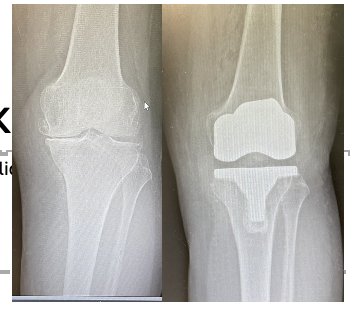
For patients with advanced osteoarthritis, total knee replacement can:
Relieve chronic pain
Restore mobility
Improve sleep
Improve quality of life
However, in the UK, patients frequently ask:
How much does knee replacement cost privately?
Is NHS care equivalent?
Do implant types differ?
Is robotic surgery worth paying for?
How long does a knee replacement last?
This guide explains:
NHS versus private pathways
Typical UK private pricing
What drives cost variation
Implant choices
Longevity and revision risk
When replacement is appropriate
The objective is to empower the patient who is suffering with knee pain to make rational financial and clinical decisions.
When Is Knee Replacement Necessary?
Knee replacement is generally indicated when:
Advanced osteoarthritis is present
Pain is persistent and severe and affects day to day life
Sleep is disturbed
Function is significantly limited eg walking, climbing stairs, sitting down or getting up from a seat
Conservative measures such as physio, pain relief, walking aids, has failed
Knee replacement is not a first-line treatment for early arthritis.
Joint preservation strategies should be exhausted first.
NHS Knee Replacement in the UK
Cost to Patient
NHS care is free at point of delivery, so there should be no cost of the procedure itself to the patient.
Advantages
While there can be local variations, the general NHS care is safe and effective:
No direct cost
High standards of care
National joint registry oversight
Strong infection control standards
What to consider in NHS care.
Waiting times vary regionally
Surgeon continuity may vary: you may not have the same surgeon operate on you as the one that reviewed you in clinic
Limited flexibility on scheduling: you may not get the time and place of your choosing.
Clinical outcomes on the NHS are often as good, and sometimes better, than the private sector.
Private Knee Replacement in the UK
Typical Cost Range (2026)
£14,000–£30,000 total package
This typically includes:
Surgeon fee
Anaesthetist fee
Hospital stay
Implant cost
Theatre costs
Post-operative follow-up
Planning and imaging for robotic knee replacement
London pricing may sit at the upper end.
What Drives Cost Variation in knee replacement surgery?
1. Hospital infrastructure
2. Length of inpatient stay
3. Implant brand and type
4. Robotic-assisted systems
5. Consultant seniority and profile
6. Geographic location
Higher cost does not automatically equate to better outcome.
Implant Choices
Modern implants are typically:
Cobalt-chromium alloy with polyethylene insert
Cemented fixation in most cases
Occasionally cementless in selected patients
Most contemporary implants are highly reliable. It may be useful to ask if your implant is ODEP10A rated. This means that it has a good track record for over ten years in the majority of patients. But….
There is a paradox, in that newer implants with modern technology will not have this rating. But remember, newer does not always mean better, and with a shorter track record these implants are not fully proven in the long term.
Marketing differentiation often exceeds functional difference.
Robotic-Assisted Knee Replacement
Robotic systems aim to improve:
Implant alignment precision
Soft tissue balancing
Reproducibility
Evidence shows:
Improved radiographic alignment especially in lower to mid volume surgeons
But there is mixed data on long-term functional superiority with some studies showing no long term difference
There are some added potential complications such as fracture around pin sites used to guide some systems
Robotics increases cost.
It may benefit selected patients but is not mandatory for excellent outcomes.
Assoc Professor Gupte performs both manual and robotic unicompartmental and total knee replacement with the MAKO knee replacement system.
Longevity of Knee Replacement
Most modern knee replacements have:
90–95% survival at 10–15 years
Many last 20+ years
Longevity depends on:
Age at surgery
Weight
Activity level
Alignment
Implant positioning and sizing
Younger patients (<60) face higher lifetime revision probability; probably because they use there new knees to a greater activity profile.
What are the risks of Knee Replacement?
Every operation has a potential complication rate:
Complications of knee replacement may include:
Infection (low but serious)
Blood clots
Stiffness or lower range of movement than expected
Persistent pain
Implant loosening
Bone fracture
Nerve or vessel damage
Scar issues such as numbness or keloid scarring
National registry data helps track outcomes.
Revision Surgery
Revision knee replacement is:
More complex
Higher risk
Longer recovery
Therefore, timing primary surgery appropriately matters.
Early replacement in younger patients increases lifetime revision risk.
What is the recovery timeline after knee replacement?
Typical milestones:
Hospital stay: 1–3 days although some units are now performing knee replacement (especially unicompartmetal knee) as a day case with post-op support
Walking with support: immediate
Return to driving after knee replacement: 6-12 weeks depending on which knee and whether automatic or manual car
Return to low-impact activity eg gentle walks: 3 months
Full recovery: 6–18 months
Strength and balance training remains essential213122§ long term.
Is Private Knee Replacement Worth It?
Private surgery may offer:
Faster access to consultant and operation
Greater scheduling control: you’re more likely to get your operation at the time and place of your choosing
Continuity of consultant care: you should be operated on by the consultant who first saw you in clinic and advised the knee replacement. It is however worth asking if the consultant is going to your whole procedure or just the key part of it. Some consultants run parallel lists and move between theatres , allowing their assistants to do some or a lot of the procedure. Many times, the wound closure is done by an experienced assistant and this is usually safe.
However:
Clinical outcomes on the NHS are often equivalent
Implant quality is high in both systems
Decision should be based on timing, personal circumstances and surgeon expertise.
When should a Knee Replacement Be Delayed?
Avoid premature replacement in:
Early osteoarthritis causing minimal symptoms
Malalignment-driven compartment disease
Focal cartilage defects
In the presence of active infection
If you have other serious medical or neurological complaints that could increase operative risk or affect rehab.
If you simply don’t feel ready for it.
Preservation options may delay replacement.
How can you work out Long-Term Value of knee replacement?
Consider:
Cost divided over lifespan of implant
Reduced analgesic use
Improved mobility
Reduced disability
Better return to work compared with continued pain and disability
For appropriate patients, knee replacement offers strong value.
For premature cases, it may limit future options.
Frequently Asked Questions
How long does a knee replacement last?
Many last 15–20 years or more, though longevity varies by patient factors.
Is robotic knee replacement surgery better?
Robotics improves precision but long-term superiority over conventional surgery remains debated.
Can I kneel after knee replacement?
Possibly. Some patients can kneel with adaptation. Comfort varies. Some patients can kneel after 6-12 months; others struggle to kneel even after 2 years but can still walk and play golf or climb stairs with minimal discomfort.
Is having a knee replacement painful?
Honestly, yes. It’s a different pain from knee arthritis, more of a soreness from the operation. Post-operative discomfort and swelling is expected but managed with multimodal pain strategies.
Conclusion
Knee replacement in the UK is, for most patients:
Safe
Effective
Durable
Private surgery offers speed and continuity.
NHS care offers high-quality treatment without cost.
The key is appropriate timing and experienced surgical execution.
Replacement should be the correct decision, not the first reflex.