Running injuries and the knee : A London Knee specialist’s guide for new runners and those in pain
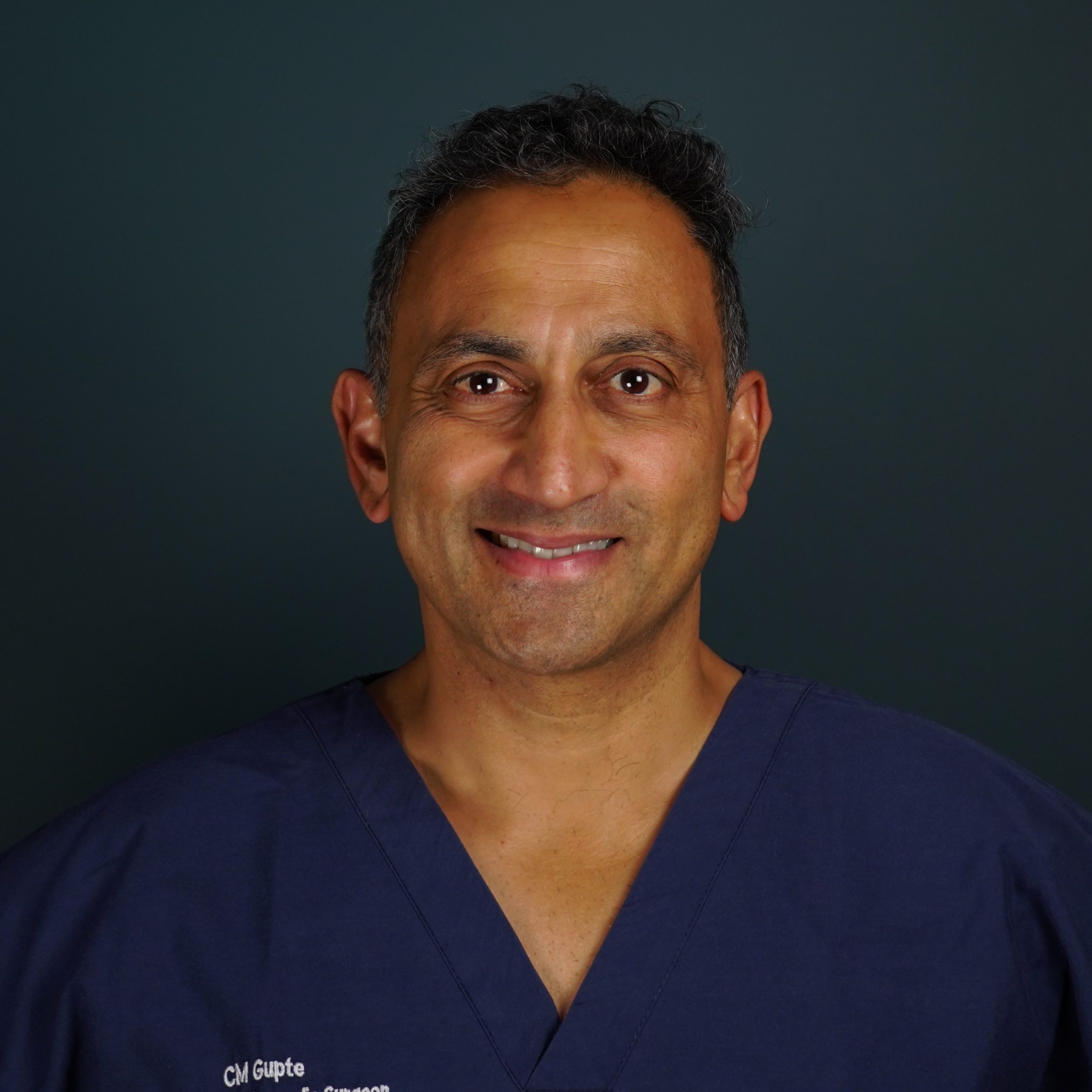
Associate Professor Chinmay Gupte
Consultant Orthopaedic Knee Surgeon | Associate Professor in Musculoskeletal Science, Imperial College London | President-Elect, British Association for Surgery of the Knee
Two groups of runners come to my knee clinic in London. The first have just taken up running, often with a spring marathon in the diary, and want to know how to avoid the injuries they have heard about. The second are already in pain, and want to know whether they need to stop.
Both deserve the same starting point, because it is the finding that most surprises patients: running does not wear out your knees.
The most useful evidence here uses a hard outcome. Timmins and colleagues, writing in the American Journal of Sports Medicine, pooled case-control data on knee surgery for osteoarthritis and found a protective association with running, with an odds ratio of 0.46 (95% CI 0.30 to 0.71) and no statistical heterogeneity between the studies. Runners in those studies were roughly half as likely to need an operation for knee arthritis. The authors were careful about the wider picture, since the literature on diagnosis and symptoms remained mixed and they called for better prospective work. But the surgical outcome is the one that matters most to my patients, and it points the opposite way to the popular fear.
Two findings from the Osteoarthritis Initiative, a large community cohort, support this. In people without osteoarthritis, self-selected runners had no increased risk of symptomatic knee osteoarthritis compared with non-runners. In people over 50 who already had knee osteoarthritis, running was associated with improved knee pain, and not with worsening pain or radiographic structural progression. An updated systematic review by Dhillon and colleagues, covering 17 studies and more than 14,000 participants, found no association between running and worsening radiographic osteoarthritis or patient-reported outcomes, with running appearing protective against knee pain.
The useful question, then, is a narrower one. Running injuries arise from excessive load increments, or from loading a joint that is already structurally compromised. Most of what follows is an application of that principle.
THE THREE MECHANISMS OF RUNNING KNEE INJURY
Most classifications of running injury are anatomical lists. I find it more useful to think in terms of mechanism, because each mechanism points to a different solution.
1. Cumulative load
This is by far the largest category. The tissue is not damaged by any single event but by repetition that outpaces its capacity to adapt. The important asymmetry is that the cardiovascular system adapts far faster than tendon, bone and cartilage. Your heart and lungs are ready weeks before your tissues are, and most running injuries occur in that gap.
The common presentations:
Iliotibial band syndrome. Pain on the outside of the knee, typically coming on at a predictable point in a run. It is still widely called ITB friction syndrome, but that name is wrong. Fairclough’s anatomical work showed the iliotibial band is firmly anchored to the femur by fibrous bands and cannot rub back and forth across the lateral epicondyle. The flicking sensation runners describe is an illusion created by shifting tension between the anterior and posterior fibres. The pain appears to come from compression of a richly innervated layer of fat and connective tissue beneath the band. This matters clinically, because it moves treatment away from stretching and rolling the band, which cannot lengthen a structure of that tensile stiffness, and towards hip and gluteal muscle function.
Patellofemoral pain. The commonest running knee complaint of all. More on this below.
Patellar and quadriceps tendinopathy. Pain at the lower or upper pole of the kneecap. Note tendinopathy rather than tendinitis: the tissue changes are degenerative rather than inflammatory, which is why anti-inflammatory approaches disappoint and progressive loading works. Both are more characteristic of jumping sports than of distance running, though both occur in runners, particularly those doing a lot of hill or speed work.
Horizontal cleavage tears of the meniscus. These are cumulative-load injuries rather than twisting injuries. They are degenerative in character and become more common with age.
That last point is worth dwelling on, because it is where I most often have to talk patients out of surgery. Meniscal tears of this type are very common in knees that do not hurt at all, so finding one on a scan does not establish that it is causing your pain. Where the tear is degenerative and the knee is not locking or giving way, the evidence supports rehabilitation over arthroscopy. Preserving meniscal tissue is among the most important things we can do for the long-term health of a runner’s knee.
2. Acute torsion
A twist on turning, on a trail, on a kerb, or on uneven ground. This produces a different pattern of injury altogether.
Meniscal tears from this mechanism are usually vertical longitudinal or bucket-handle tears, morphologically distinct from the degenerative cleavage tears above. The distinction matters a great deal. Vertical tears in the peripheral, well-vascularised zone are the ones that can often be repaired rather than excised, and repair is better than excision for long-term joint health. A systematic review by Hurmuz and colleagues, looking specifically at posterior medial meniscus injuries, found progression to osteoarthritis in 21.3% of patients after repair against 51.4% after meniscectomy, alongside better functional scores in the repair group. Those figures come from six studies and 298 patients, so treat them as indicative rather than precise, but the direction is consistent with everything else we know about meniscal preservation.
This is the strongest argument for prompt assessment after a twisting injury. The window in which a tear can be repaired is not indefinite.
Anterior cruciate ligament injury from running alone is rare. The ACL is threatened by deceleration, pivoting and cutting, not by straight-line running. A severe twist on rough ground can do it, but if you run roads and parks this is not something to worry about. On the trails and rougher ground of Richmond Park or Hampstead Heath, it is the ankle rather than the knee that is most often the casualty.
3. Patellofemoral overload
Pain at the front of the knee, worse going down stairs, worse on hills, worse when kneeling, and often worse after sitting for a long period with the knee bent.
Hills are the classic aggravator, and London runners find them whether they intend to or not: Primrose Hill, Greenwich Park, Swain’s Lane, the long drag up Sawyer’s Hill in Richmond Park. Both directions increase patellofemoral joint contact force because both involve running with a more flexed knee, and downhill running adds a substantial eccentric demand on the quadriceps. I would not want to leave the impression that this is a hill runner’s problem, though. It is the most common running knee complaint overall, and cumulative volume, quadriceps and gluteal capacity, and training error all contribute on entirely flat ground, the towpath and the Thames Path included.
One reassurance, because patients often arrive having read otherwise. Pain at the front of the knee does not mean the cartilage behind your kneecap is being destroyed. Radiographic change and symptoms correlate poorly in both directions: many people have cartilage change and no pain, and many have significant pain with normal-looking cartilage. Patellofemoral pain is best understood as load intolerance, and load tolerance can be rebuilt.
PREVENTING RUNNING INJURIES: IF YOU ARE JUST STARTING
Five things, in order of how much difference they make.
1. Watch your longest run, not just your weekly mileage.
This is the advice that has changed most in recent years. The Garmin-RUNSAFE study followed 5,205 runners across 588,071 running sessions, and 35% sustained a running-related injury. Compared with a runner’s longest run in the previous 30 days, a single run 10 to 30% longer carried a 64% higher rate of overuse injury, 30 to 100% longer carried 52%, and more than double carried 128%. The metrics built into most running watches and training apps did not behave as expected. The week-to-week ratio showed no relationship with injury at all, and the acute:chronic workload ratio showed an inverse one.
The practical rule is to keep any single run within roughly 110% of your longest run in the past month. If your longest run in the last four weeks was 10km, your next long run should be around 11km, not 15km. It also means that if you have had two weeks off, your longest recent run has reset, and so must your long run.
Two caveats. Staying under 10% is not a guarantee of safety, since the same data showed a smaller, non-significant rise in injury rate even for progressions between 1% and 10%. And this is observational work, so it identifies a strong association rather than proving that following the rule prevents injury. It remains the largest study of its kind, and the most practical thing a new runner can act on.
2. Do strength work.
Across sport as a whole, exercise-based prevention programmes, and strength training in particular, are the best-evidenced measure we have. Lauersen’s meta-analysis of randomised trials found that exercise interventions roughly halved overuse injuries, with a relative risk of 0.53. The running-specific picture is less settled: a systematic review of trials in runners found that multicomponent exercise therapy did not reduce knee injury risk. My own reading is that this reflects how difficult it is to run a good prevention trial in this population rather than an absence of benefit, and the wider evidence on tendon and bone adaptation supports that. It is worth knowing that the proof in runners is not yet there.
Two to three sessions weekly of single-leg squats, calf raises, hip abduction work, Nordic hamstring curls or Romanian deadlifts, and core stabilisation. Two to three sets of 8 to 12 repetitions at 70 to 80% of maximum effort.
I would highlight the calf in particular. The plantarflexors absorb a large share of running load, and when they fatigue that load transfers upwards to the knee. Calf capacity is one of the most neglected and most modifiable variables in a runner’s programme.
3. Choose shoes for comfort, not for correction.
The footwear evidence is a good deal more sceptical than the marketing. Agresta and colleagues reviewed the four paradigms that have driven shoe design, namely pronation control, impact force modification, habitual motion path and the comfort filter, and found the evidence for any of them generally limited. In the absence of a supported paradigm, their recommendation was a shoe that is lightweight, comfortable, and has minimal pronation-control technology. A secondary analysis of a randomised trial in leisure-time runners found perceived shoe cushioning and comfort were associated with lower injury risk. Despite decades of footwear development, running injury rates have not fallen. Price and brand are poor proxies for safety. If a shoe feels good on your foot, that is the most reliable individual signal available.
4. Treat fatigue as a training variable.
Running technique deteriorates measurably with fatigue. Hip control drops, the pelvis drops on the opposite side, and eccentric control declines. Whether that drift causes injury is inferred more than proven, but the principle is sound: the final third of a long run is the highest-risk portion of it, and it is the portion in which people are most inclined to push.
Two related factors are routinely ignored. The first is sleep. The second is energy availability, since under-fuelling relative to training load is a well-evidenced driver of bone stress injury, particularly though not exclusively in female runners. Increasing mileage while eating as you did before is a real risk rather than a virtue.
5. Consider running technique work if you keep getting injured.
A systematic review of randomised trials by Alexander and colleagues found that retraining runners to land more softly reduced knee injury risk by around two-thirds, with a relative risk of 0.32. This was low-certainty evidence resting on a single trial of 320 participants, so treat it as promising rather than settled. The same review found better support for technique retraining in managing established patellofemoral pain. Increasing your cadence by 5 to 10% at the same pace also reduces load across the knee.
I would not send every new runner for gait analysis, since screening asymptomatic runners has poor predictive value. For a runner with recurrent or persistent problems, it is one of the higher-yield options available.
IF YOUR KNEE ALREADY HURTS
Usually reassuring:
- Pain that comes on at a predictable point in a run and settles within a day
- Pain that eases as you warm up and does not worsen through the run
- No swelling
- Symptoms clearly related to a recent increase in distance, hills or pace
For these, the answer is very rarely to stop running entirely. Reduce volume, remove the aggravating variable, usually the long run or the hills, hold that level until symptoms settle, and rebuild from a lower base. Add strength work now rather than later.
When to See a Knee Specialist About a Running Injury
Arrange assessment if you have:
- Swelling or effusion, particularly recurrent swelling after running
- Locking, catching, or the knee giving way, which suggest mechanical pathology
- A twisting injury with immediate pain and subsequent swelling. Do not wait this one out; if a meniscal tear is repairable, that opportunity is time-limited
- Pain that worsens during a run rather than easing
- Pain that changes your gait. Limping is a signal to stop rather than to push through
- Pain persisting beyond 7 to 10 days despite sensible load reduction
- Night pain or pain at rest
If you have had previous knee surgery, the calculus is different and should be individualised. After ACL reconstruction, running biomechanical asymmetries commonly persist well beyond formal rehabilitation clearance, and time-based or strength-based clearance alone is insufficient. After partial meniscectomy, prognosis depends on how much tissue was removed, the tear type, age, BMI and the state of the cartilage. In both cases return to running is achievable for most people, though the plan should be built around your knee specifically rather than a generic schedule.
CHOOSING A KNEE SPECIALIST IN LONDON
Runners often ask how to choose between the many orthopaedic surgeons practising in London. A few things are worth weighing, whoever you end up seeing.
Subspecialisation. Orthopaedics is a broad field. For a running injury you want a surgeon whose practice is focused on the knee rather than one who covers the whole skeleton, and ideally one with fellowship training in knee surgery and sports injury.
Membership of the relevant professional body. In the UK that is the British Association for Surgery of the Knee.
Whether they treat runners specifically. The return-to-running decision after meniscal or ACL surgery is a distinct clinical judgement, and it benefits from someone who makes it regularly.
Whether non-operative management is offered first where appropriate. For degenerative meniscal tears in particular, a specialist who is willing to tell you that you do not need an operation is giving you better care than one who is not.
Access to a multidisciplinary team. Physiotherapy, gait assessment and strength and conditioning are not adjuncts to knee treatment for a runner. They usually are the treatment.
The right question is rarely who is the best knee surgeon in London. It is who is the right specialist for this particular knee, this particular injury, and this particular goal. A surgeon who asks what distance you are training for, and by when, is asking the right question.
FREQUENTLY ASKED QUESTIONS
Should I stop running if my knee hurts?
Usually not entirely. Most running knee pain is load intolerance, and complete rest deconditions the tissue you need to rebuild. Reduce volume, remove the aggravating variable, and rebuild gradually. Stop and seek assessment if there is swelling, locking, giving way, or pain that alters your gait.
Does running cause knee arthritis?
The evidence does not support that. Pooled analysis found runners had roughly half the odds of needing knee surgery for osteoarthritis compared with non-runners, and a systematic review of 17 studies found no association between running and worsening radiographic osteoarthritis. Recreational running also compares favourably with both a sedentary lifestyle and high-volume competitive running. Sedentary behaviour carries the greater joint health risk.
When should I see a knee specialist about running knee pain?
If the pain persists beyond 7 to 10 days despite reducing your training, if the knee swells, locks or gives way, if you sustained a twisting injury, or if the pain is worsening during runs rather than easing. A twisting injury with swelling should be assessed promptly, because repairable meniscal tears have a time-limited window.
Do I need an MRI scan?
Not always, and sometimes not helpfully. Degenerative meniscal tears and cartilage changes are very common in knees that do not hurt, so a scan can identify findings that are not the cause of your symptoms. Imaging is most useful where the history and examination suggest a specific mechanical problem.
Can I run again after meniscal surgery or ACL reconstruction?
For most people, yes. Around half of runners return to their previous running frequency within a year of partial meniscectomy. After isolated meniscal repair, 81 to 89% of athletes return to sport, at an average of around five and a half months, though this takes longer where ACL reconstruction was carried out at the same time. After ACL reconstruction, return is common, but clearance should include assessment of running biomechanics rather than time and strength testing alone.
What are the best running shoes for knee pain?
The evidence does not support prescribing shoes by foot type or pronation. Lightweight, comfortable, and minimal pronation-control technology is the supportable recommendation, and perceived comfort is the most reliable individual guide.
WHERE THIS LEAVES YOU
For new runners, the evidence favours running over not running, for joint health as well as for cardiovascular health, mental health and longevity. Runners are not more likely to end up needing knee surgery for arthritis. On the best available pooled data they are considerably less likely to. Injury risk is not a reason to avoid the sport. It is a reason to build gradually, watching your longest single run above all, to strengthen, to choose comfortable shoes, and to respect fatigue.
For runners with a sore knee, most pain is load intolerance and load tolerance is trainable. Reduce, rebuild, and strengthen. Swelling, locking, giving way, or a twisting injury are a different matter and deserve proper assessment, because in those cases what happens in the first few weeks can determine the health of your knee for many years afterwards.
Associate Professor Chinmay Gupte is a Consultant Orthopaedic Knee Surgeon and Associate Professor in Musculoskeletal Science at Imperial College London, and President-Elect of the British Association for Surgery of the Knee. He treats runners and sports injury patients in London.
This article is for general information and professional education. It does not constitute individual medical advice. If you have specific symptoms or post-operative concerns, please seek personalised assessment from a qualified clinician.
Key References
- Agresta C, Giacomazzi C, Harrast M, Zendler J. Running injury paradigms and their influence on footwear design features and runner assessment methods: a focused review to advance evidence-based practice for running medicine clinicians. Front Sports Act Living. 2022;4:815675.
- Alentorn-Geli E, Samuelsson K, Musahl V, Green CL, Bhandari M, Karlsson J. The association of recreational and competitive running with hip and knee osteoarthritis: a systematic review and meta-analysis. J Orthop Sports Phys Ther. 2017;47(6):373-390.
- Alexander JLN, Culvenor AG, Johnston RRT, Ezzat AM, Barton CJ. Strategies to prevent and manage running-related knee injuries: a systematic review of randomised controlled trials. Br J Sports Med. 2022;56(22):1307-1319.
- Dhillon J, Kraeutler MJ, Belk JW, et al. Effects of running on the development of knee osteoarthritis: an updated systematic review at short-term follow-up. Orthop J Sports Med. 2023;11(3):23259671231152900.
- Fairclough J, Hayashi K, Toumi H, et al. The functional anatomy of the iliotibial band during flexion and extension of the knee: implications for understanding iliotibial band syndrome. J Anat. 2006;208(3):309-316.
- Fairclough J, Hayashi K, Toumi H, et al. Is iliotibial band syndrome really a friction syndrome? J Sci Med Sport. 2007;10(2):74-76.
- Frandsen JSB, Hulme A, Parner ET, et al. How much running is too much? Identifying high-risk running sessions in a 5200-person cohort study. Br J Sports Med. 2025;59(17):e109380.
- Hurmuz M, Ionac M, Hogea B, Miu CA, Tatu F. Osteoarthritis development following meniscectomy vs. meniscal repair for posterior medial meniscus injuries: a systematic review. Medicina. 2024;60(4):569.
- Knurr KA, Kliethermes SA, Stiffler-Joachim MR, Cobian DG, Baer GS, Heiderscheit BC. Running biomechanics before injury and 1 year after anterior cruciate ligament reconstruction in Division I collegiate athletes. Am J Sports Med. 2021;49(10):2607-2614.
- Lauersen JB, Bertelsen DM, Andersen LB. The effectiveness of exercise interventions to prevent sports injuries: a systematic review and meta-analysis of randomised controlled trials. Br J Sports Med. 2014;48(11):871-877.
- Lee YS, Lee OS, Lee SH. Return to sports after athletes undergo meniscal surgery: a systematic review. Clin J Sport Med. 2019;29(1):29-36.
- Lo GH, Driban JB, Kriska AM, et al. Is there an association between a history of running and symptomatic knee osteoarthritis? A cross-sectional study from the Osteoarthritis Initiative. Arthritis Care Res (Hoboken). 2017;69(2):183-191.
- Lo GH, Musa SM, Driban JB, et al. Running does not increase symptoms or structural progression in people with knee osteoarthritis: data from the Osteoarthritis Initiative. Clin Rheumatol. 2018;37(9):2497-2504.
- Malisoux L, Delattre N, Urhausen A, Morio C, Theisen D. Association of shoe cushioning perception and comfort with injury risk in leisure-time runners: a secondary analysis of a randomised trial. Eur J Sport Sci. 2025;25(11):e70063.
- Nigg BM, Baltich J, Hoerzer S, Enders H. Running shoes and running injuries: mythbusting and a proposal for two new paradigms: ‘preferred movement path’ and ‘comfort filter’. Br J Sports Med. 2015;49(20):1290-1294.
- Sayegh ET, Dib AG, Lowenstein NA, Collins JE, Breslow RG, Matzkin E. Up to one-half of runners return to running one year after arthroscopic partial meniscectomy. Arthrosc Sports Med Rehabil. 2022;4(4):e1505-e1511.
- Timmins KA, Leech RD, Batt ME, Edwards KL. Running and knee osteoarthritis: a systematic review and meta-analysis. Am J Sports Med. 2017;45(6):1447-1457.